Pearl necklaces look delicate, yet their silk or nylon thread carries considerable daily stress. Many owners notice stretching only when the necklace hangs lower than before. A small gap may appear between pearls. Then, one sudden pull can break the entire strand.
This guide explores How to prevent pearl necklaces from stretching through practical care and professional restringing advice. Experienced jewelers often inspect the thread, knots, clasp, and pearl holes together. The thread may weaken from skin oils, perfume, moisture, or repeated friction against clothing. Pearls can also rub against one another when worn too loosely or stored carelessly. Keep them flat.
The safest habits are simple. Put pearls on after cosmetics dry. Remove them before bathing, swimming, exercising, or sleeping. Wipe each pearl with a soft, slightly damp cloth after use. Avoid pulling the strand to test its strength. That test can create the damage you are trying to find.
A qualified jeweler can check whether the thread has become fuzzy, slack, stained, or brittle. Knotting between pearls adds protection, but it does not make a necklace indestructible. The correct thread size and restringing method depend on pearl weight, hole size, and clasp design. Some advice online sounds convincing but ignores these details. That is where mistakes begin.
This article will help you recognize early warning signs, improve storage, and choose a sensible restringing schedule. Your necklace may seem fine today. Look closer.
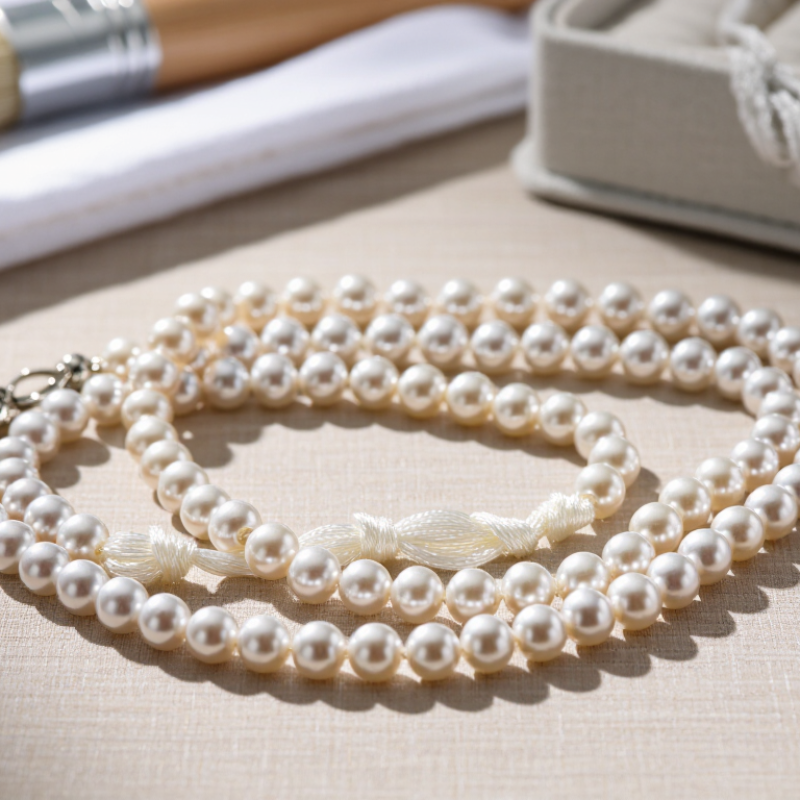
How to Prevent Pearl Necklaces From Stretching and Breaking?
The string matters as much as the pearls. Silk offers a soft, traditional drape and allows knots to sit neatly between pearls. Choose a cord that fits the drill holes without scraping their edges. For frequent wear, a suitable synthetic beading cord may resist moisture better, though it can feel less supple. No material is completely wear-proof.
Knot between each pearl to limit friction and keep beads from scattering if the strand breaks. Use small, even knots that rest close to the pearls without pulling them tightly together. A needle and steady tension help, but check the strand from the clasp toward the end; uneven spacing can hide a loose knot. Re-stringing is sensible when knots look dark, flattened, or stretched. I have found that judging cord condition from appearance alone is imperfect, especially with pale silk.
Tips: Keep the strand dry and store it flat, away from sharp jewelry. Avoid tugging it over your head; open the clasp instead. If pearls slide together or the cord shows fuzz, stop wearing the necklace until it is checked. A professional re-stringer can match cord thickness and knot size to the pearls’ holes.
| Stringing Material or Method | Key Characteristics | How It Helps Prevent Damage | Best Use and Care |
|---|---|---|---|
| Silk thread | Traditional, flexible, and soft against pearls; it can absorb moisture and gradually weaken with wear. | Its flexibility allows a necklace to drape naturally. Knots between pearls help limit pearl-to-pearl rubbing and reduce loss if the strand breaks. | Suitable for many classic pearl strands. Keep it dry, avoid pulling it tight, and have it restrung when the thread looks worn or the knots become loose. |
| Nylon or synthetic bead cord | Generally less absorbent and more resistant to moisture than silk. Strength and flexibility vary by cord type and thickness. | A properly sized cord can provide durable support. Knots or other appropriate spacing methods help protect pearls from direct contact. | Choose a cord that fits the pearl holes without forcing or excessive friction. Follow the cord maker’s guidance and inspect it regularly. |
| Knots between pearls | Each pearl is separated by a small knot, commonly made with silk or another suitable stringing material. | Knots cushion pearls, reduce scratching from contact, and help prevent all the pearls from sliding off if the strand parts. | Keep knots close enough to separate the pearls without compressing them. Use a consistent knotting technique and secure the ends carefully. |
| Unknotted stringing | Pearls sit directly next to one another on the strand, with no knots between them. | It does not provide the same separation or containment as a knotted strand, so a break can allow multiple pearls to fall off. | Use only when appropriate for the design and construction. Handle gently and check frequently for abrasion, looseness, or damage. |
| Correct cord and hole fit | The cord should pass through each pearl smoothly and suit the size and condition of the drill holes. | A poor fit can cause friction, strain the cord, or make knots unstable; forcing cord through a hole can damage the strand. | Do not pull hard to thread a pearl. If holes vary in size or have rough edges, consult a qualified jeweler for suitable materials and restringing. |
| Gentle wear and storage | Perspiration, cosmetics, moisture, and tension can affect both pearls and stringing materials over time. | Reducing exposure and strain helps preserve the cord and lowers the chance of premature stretching or breakage. | Put pearls on after applying cosmetics, remove them before bathing or exercise, wipe them with a soft cloth after wear, and store them separately without hanging the strand. |
| Routine inspection and restringing | Wear may appear as stretched gaps, loose knots, fraying, discoloration, or cord visible between pearls. | Finding deterioration early makes it possible to restring the necklace before the strand breaks. | Inspect the necklace periodically, especially if worn often. Arrange professional restringing when the cord or knots show signs of wear; timing depends on use and material condition. |
Practical tip: No stringing material lasts indefinitely. Select cord based on the pearl holes and necklace design, use secure spacing knots where appropriate, and have a worn strand assessed before continued wear.
Hold the strand near the clasp and fasten it without pulling the opposite end. Let the pearls rest across your open palm before lifting the necklace over your head.
Undo the clasp first, then support the strand with both hands. Free any snag gently. Don’t yank.
Wipe it with a soft, dry cloth and lay it flat in a fabric-lined case. Avoid hanging it from a hook, which can strain the cord over time.
Look for gaps between pearls, loose or flattened knots, frayed thread, discoloration, or unusually slack sections. Check closely near the clasp.
Check it every few months and before an important event. If you wear it often, inspect it more frequently.
Lay it on a clean cloth under bright light. Gently flex short sections without pulling. A hard tug can damage pearls or thread.
Stop wearing the necklace and ask a qualified jeweler to assess it. Don’t wait for a visible break.
Repeated wear, perspiration, and harsh chemicals may weaken the thread or affect the pearls’ surface. Wipe the necklace gently after wearing it. I used to rush this step; that was not wise.
To understand How to prevent pearl necklaces from stretching, start with a strong, suitable stringing material and secure knots between the pearls. Knots help keep the strand orderly and reduce friction if the thread weakens. Handle the necklace gently when putting it on or taking it off; avoid pulling, twisting, or tugging at the clasp, as repeated strain can loosen the thread over time.
Store pearls separately in a soft pouch or lined box, away from moisture, heat, and rough or abrasive items. Check the strand regularly for loose knots, gaps, fraying, or other weak spots, and have it restrung or repaired as soon as wear appears. Taking care of small problems early can help prevent a broken strand, protect the pearls, and extend the necklace’s useful life.

