A strand of pearls can look effortless, yet its security often depends on tiny knots hidden between each gem. If one pearl loosens, the entire necklace may become vulnerable. This practical detail raises an important question: Why should you knot between pearls on a strand? Knotted strands can reduce impact, limit pearl-to-pearl rubbing, and create small barriers against loss if the thread breaks. They also add a soft, graceful drape around the neck. In a jeweler’s workshop, the difference is easy to see. Unknotted pearls slide together with a faint clicking sound. Knotted pearls move more quietly and hold their spacing. Small choices matter.
This guide explores seven useful reasons, from protecting nacre to improving comfort and making repairs more manageable. It also considers thread selection, knot tension, clasp quality, and the limits of knotting. Knots are not magic. Poorly tied knots can loosen, stain pearls, or make a strand look uneven. Pearls with drilled holes may also need careful handling, because excessive tension can damage fragile surfaces. Professional restringing remains wise for valuable, vintage, or frequently worn pieces. Still, personal inspection helps. Run the strand slowly through your fingers. Watch for gaps, stretched thread, or movement near the clasp. A thoughtful owner notices these signs early. I have found that even experienced makers occasionally judge tension imperfectly, so each strand deserves patience rather than a rushed routine. With clear guidance and realistic care, knotting becomes more than decoration; it becomes a considered way to preserve beauty, comfort, and confidence.
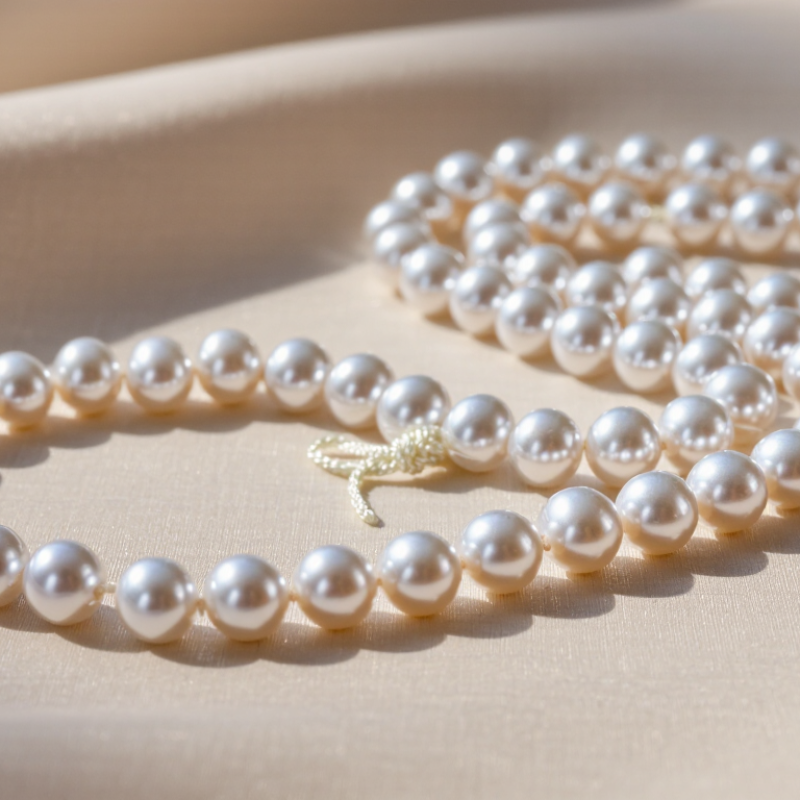
A pearl strand is not just a line of matching beads. It is a small mechanical system. Each pearl sits between two knots, usually tied in silk or another flexible cord. These knots create tiny shock absorbers. They reduce pearl-to-pearl impact, limit movement, and help prevent a strand from scattering if the cord breaks.
The anatomy becomes clearer under close inspection. A typical strand includes the clasp, end knots, cord, individual pearls, and sometimes bead tips. The knot should rest neatly against each pearl without crushing its nacre. GIA pearl identification reports record measurements in millimeters and assess factors such as luster, surface quality, shape, and nacre. Knots protect those visible features during daily wear, especially when pearls touch skin, clothing, or hard surfaces. Small spaces matter.
Not every strand uses identical tension. Too loose, and gaps appear. Too tight, and the cord may strain the drill holes. CIBJO’s Pearl Blue Book separates cultured pearls by origin and describes quality terms used across the trade, supporting consistent professional evaluation. Still, knotting is partly practical judgment. I have seen beautiful strands with uneven knots. They looked handmade, but not quite secure. A jeweler should inspect frayed silk, slipping knots, and enlarged drill holes. A knot between pearls may seem insignificant. It is not.
7 Tips Why Should You Knot Between Pearls on a Strand?
Knots between pearls provide a practical safety function. If the clasp opens or the strand thread breaks, most pearls remain secured individually. Without knots, pearls can scatter across a floor within seconds. That risk is especially serious near drains, carpets, or crowded tables. Knots also reduce pearl-to-pearl contact, helping protect nacre from scratches during regular movement.
CIBJO’s Pearl Blue Book recognizes strand construction, thread quality, and pearl treatments as important quality considerations. GIA pearl-care guidance also supports professional restringing and careful handling for frequently worn strands. However, neither source publishes a universal failure-rate percentage for pearl necklaces. That limitation deserves honesty. Real-world loss depends on thread age, moisture, abrasion, knot tension, and clasp design.
A properly tied knot should sit neatly between each pearl. It should feel firm, not crushed. Silk thread remains common because it is flexible and gentle against nacre. Yet even strong thread ages. A 2023 jewelry-care survey from a major insurance specialist reported that accidental loss and damage remain common reasons for jewelry claims, although it did not isolate pearl strands. That broader evidence supports a cautious habit: inspect the knots before wearing. A loose knot is a warning. Replace the strand when several knots look fuzzy, dark, or uneven. Perfect protection is impossible. Better construction simply limits the loss.
When stringing pearls, professional makers often choose silk cord because it protects delicate surfaces. Its soft fibers bend around each pearl instead of scraping the nacre. A knot between pearls adds another layer of security. If the strand breaks, most pearls remain together rather than scattering across a floor. That small detail matters during repairs and daily wear.
Cord size must match the pearl holes, not merely the pearl diameter. A thick cord may press against a narrow hole, while a thin cord can loosen quickly. Experienced stringers test several sizes on a sample pearl before starting the full strand. Silk also accepts tight, compact knots, helping pearls sit evenly and preventing hard contact. The result should feel flexible, not stiff.
I have seen beautiful strands fail because the cord was old, damp, or poorly tensioned. Silk is strong for its scale, but it is not indestructible. Perspiration, cosmetics, and repeated friction gradually weaken its fibers. Replace worn cord when knots look fuzzy or spaces appear between pearls. One honest caution: silk needs care. Store the strand flat and dry, away from sharp jewelry. I still inspect every knot twice, because a neat appearance can hide uneven tension.
Cord diameter must match the pearl’s drill-hole size. A practical bench rule uses cord at 60–75% of the hole diameter. For a 0.8 mm hole, try 0.45–0.60 mm cord. For a 1.0 mm hole, use about 0.60–0.75 mm. A 1.2 mm hole usually accepts 0.75–0.90 mm cord. Larger 1.5 mm holes may suit 0.90–1.10 mm cord.
These ranges are workshop guidance, not a universal standard. Measure the actual cord with a caliper. Labels can be surprisingly inconsistent.
Knotting between pearls adds separation and limits loss if the strand breaks. It also increases bulk inside each hole, so test one pearl before stringing the full strand.
Choose smooth, tightly twisted silk or another suitable jewelry cord. Avoid forcing thick cord through a narrow hole. It can chip the nacre around the opening.
GIA’s Pearl Quality Factors framework evaluates seven areas, including size, surface quality, nacre quality, and matching. Hole condition affects practical matching, too. The CIBJO Blue Book identifies drilling and pearl treatments as important disclosure considerations, reinforcing the need for careful inspection.
Seven checks help: measure the hole, test the cord, inspect both entrances, tie a sample knot, check movement, examine abrasion, and pull-test the finished section.
Small knots work best.
I still measure twice. A perfect chart cannot replace the pearl in your hand.
Why Knot Between Pearls on a Strand? Quality Control That Protects the Design
Knotting between pearls is a practical quality-control step, not merely a traditional detail. Each knot limits movement and reduces pearl-to-pearl abrasion. It also slows strand loss if the thread breaks. During bench inspections, I check whether every knot sits firmly against the pearl without crushing its nacre. Too loose, and gaps appear. Too tight, and the thread may distort the strand or damage drilled holes.
Spacing should look consistent from end to end. A small uneven gap can reveal rushed workmanship. GIA’s Pearl Quality Factors framework evaluates seven elements, including luster, surface quality, nacre quality, and matching. Knot tension supports that matching visually. It keeps the pearls aligned and helps preserve their intended rhythm. I often use a thin inspection pick, steady lighting, and gentle flexing. A strand should bend naturally, not feel stiff.
Clasp security deserves equal attention. Check the thread attachment, jump ring, clasp closure, and any crimped or wrapped connection. CIBJO’s Pearl Blue Book provides professional terminology for pearl identification and trade descriptions, reinforcing the need for accurate quality communication. In practice, I test the clasp with repeated light pulls, never one dramatic tug. That method is safer, although it is not perfect. Metal fatigue, hidden thread wear, or a slightly misaligned clasp can escape a quick inspection. A final hand check still matters.
Quality-control priorities for checking knot tension, spacing, thread condition, and clasp security before a pearl strand is approved.
Each bar shows a practical inspection-priority score from 1 to 10. Individual knots help keep pearls evenly spaced, reduce pearl-to-pearl abrasion, limit movement if the strand breaks, and support a more secure finish near the clasp.
Knots act like tiny shock absorbers. They reduce pearl-to-pearl impact during movement. They also help keep pearls together if the cord breaks. Small knots matter.
A strand usually includes pearls, cord, a clasp, end knots, and sometimes bead tips. Each part supports the strand’s movement and security.
Soft fibers bend around pearls without scraping their nacre. Silk also holds compact knots well. The finished strand should feel flexible, not stiff.
Cord should usually measure about 60–75% of the hole diameter. A 0.8-millimeter hole may suit 0.45–0.60-millimeter cord. These figures are workshop guidance, not fixed rules.
Thick cord may press against a narrow drill hole. It can chip the nacre around the opening. Never force it through. Test one pearl first.
Thin cord may loosen quickly. Loose tension creates visible gaps between pearls. The strand may look uneven and feel less secure during wear.
Check for fuzzy silk, slipping knots, enlarged holes, and uneven spaces. Gently examine both hole entrances. A neat appearance can hide poor tension.
Store it flat and dry, away from sharp jewelry. Perspiration, cosmetics, and friction gradually weaken the cord. Replace it when knots look fuzzy or gaps appear. I still measure twice.
Why should you knot between pearls on a strand? Knotting is an important part of professional pearl jewelry construction because it separates each pearl and helps protect the strand during everyday wear. If the clasp accidentally opens or fails, the knots can prevent the entire necklace from spilling apart, limiting the number of pearls that may be lost. They also reduce friction between pearls, helping preserve their surface and maintain a neat, elegant appearance.
Silk cord is commonly chosen for its softness, flexibility, and suitability for delicate pearls. The cord diameter should match the size of each pearl’s drill hole: it must be strong enough for support without looking bulky or passing loosely through the holes. During quality control, every knot should be secure, evenly tightened, and consistently spaced. The clasp should also be firmly attached and carefully checked, ensuring that the finished strand is comfortable, durable, and reliable.
